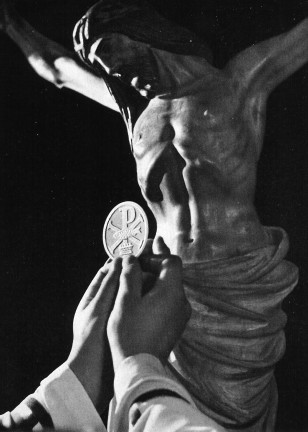
A Prayer For Priests
Don’t Suffer Alone…Ask Mary For Help!
How Facebook Became My Faithbook
Today, I’d like to feature a guest blog by my friend from the UK, Marion Teague. Marion does an excellent job explaining how Facebook can be a great evangelization tool. It’s a point that I strongly agree with, as I use Facebook and Twitter extensively in my evangelization work. Great job, Marion…Thanks for sharing!
How Facebook became my Faithbook
I had signed up to the popular social networking site Facebook a few years ago. For a long time I didn?t do much with it ? I had about five ?friends?, a couple of pictures uploaded, and the applications seemed silly and childish. Being the wrong side of fifty, I was thinking it was all kids? stuff.
Then I discovered discussion groups ? of which Facebook has thousands, tucked away. Hmm, I thought, wonder if there are any for Catholics… Soon I was plunged into a whole new world!
There are quite a number of Catholic discussion groups; they vary in both level of activity and style of management. Some are friendlier than others.
What have I learned? Firstly, I am overjoyed to find so many people asking about Catholic teaching, debating core doctrines, and deeply and sincerely wanting to both increase their own faith and share it with others. Reading through discussion threads I am impressed by both the knowledge and the warmth of many of the contributors.
Questions about the faith are usually answered kindly and quickly, with support from both Scripture and Catechism and often with links to websites rich in information and spirituality. Sometimes there are battles (we are only human) and the fur flies in debates on emotive issues such as politics, abortion, homosexuality and the never-ending conflict between ?Traditionalist? and ?Modern?. Whatever their views, two things link the Catholic contributors ? their passion for their faith and their zeal for sharing it.
Secondly, not all contributors to these forums are Catholics. Atheists, Mormons, and Christians of all denominations join these groups. Their reasons are hazy ? whether with the intention of converting the papists, or out of genuine enquiry, I do not know. I have been staggered to find that many non-Catholics still do not consider Catholics as Christians! In responding to these, apologetics comes to the fore ? and there are some skilled apologists on the groups. I and, I am sure, many other ?cradle? Catholics, have learned a tremendous amount from these.
Apart from groups there are Facebook ?pages? ? these are like profiles, and if you ?like? a page, the administrator?s comments will appear on your newsfeed. These are usually quotations from Scripture or the saints ? a lovely boost to my day.
As a result, my own spiritual life has improved, my devotion to the Mass increased, and my understanding of doctrines deepened.
The greatest of all joy to me is the friendships I have made ? I am now part of a small and growing band of lovely people across the globe. We are always there for each other in times of need ? prayer requests are answered promptly and with joy, whether it be employment trouble, sickness, bereavement, children, whatever. We also chat, like any other group of friends, about our holidays, pets, home improvements, and love to share a joke or two.
Facebook, like the internet in general, is neither good nor bad in itself, but if we let God use it, He uses it to shower blessings in abundance.
Remembering 9/11
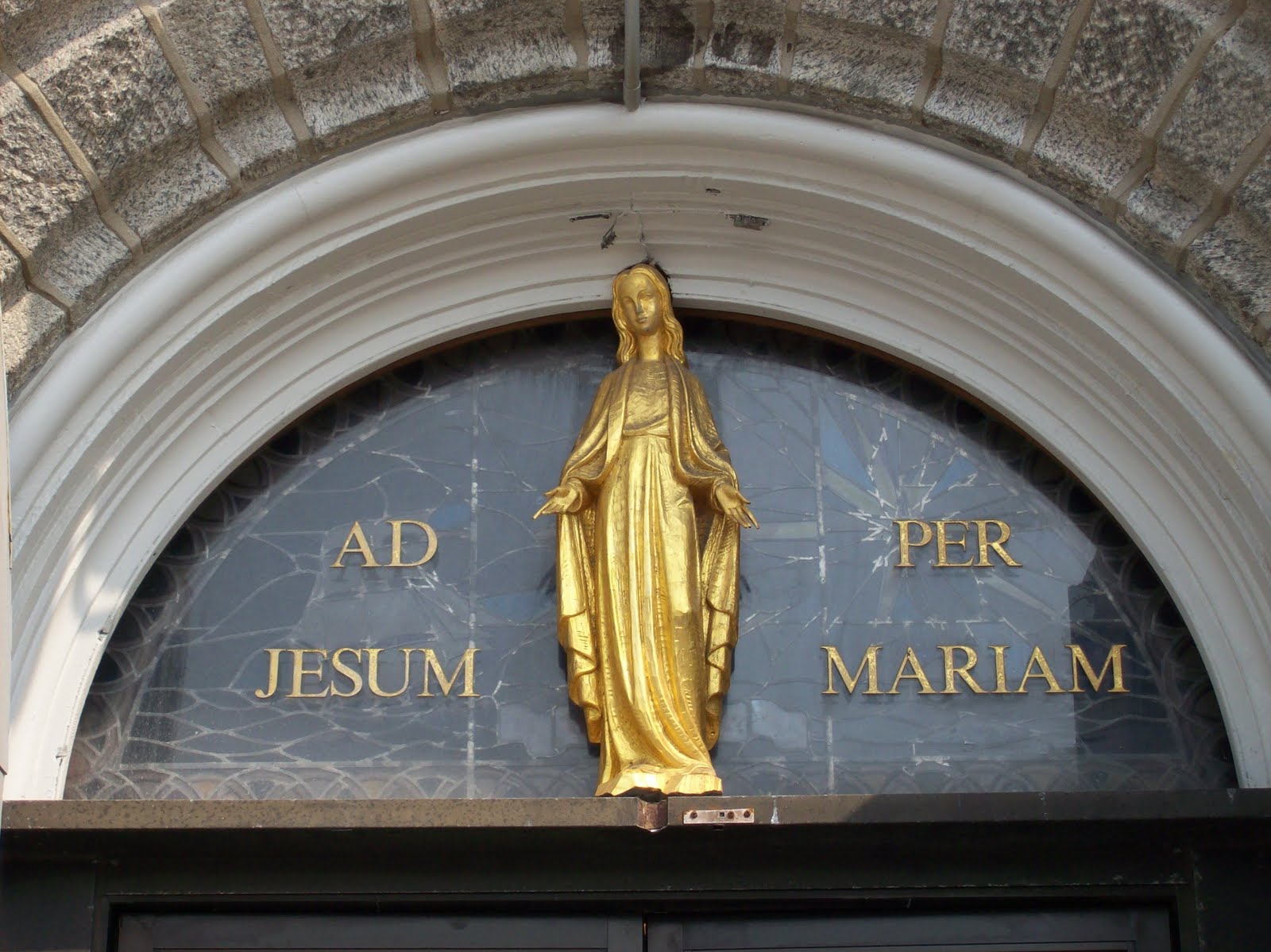
Ad Jesum Per Mariam (To Jesus Through Mary)!
Psalm 119 And Loving God’s Law
God Chooses The "Foolish"
Consider your own calling, brothers and sisters.
Not many of you were wise by human standards,
not many were powerful,
not many were of noble birth.
Rather, God chose the foolish of the world to shame the wise,
and God chose the weak of the world to shame the strong,
and God chose the lowly and despised of the world,
those who count for nothing,
to reduce to nothing those who are something,
so that no human being might boast before God.
It is due to him that you are in Christ Jesus,
who became for us wisdom from God,
as well as righteousness, sanctification, and redemption,
so that, as it is written, Whoever boasts, should boast in the Lord. (1 Corinthians 1:26-31)
Recognizing Our Bishops As The Modern Day Apostles
The Church teaches that our modern day bishops are the successors to the Apostles. Just like the original twelve, they have been chosen to shepherd the flock of Catholics in the world. All too often we lose sight of this fact and criticize our bishops for being too liberal, too conservative, too timid or too forceful. While there may be cases where that is true, it?s important to respect these men for the role that they fulfill. They have a difficult and thankless job, but without them we would be like ?sheep without a shepherd?.
In honor of St. Bartholomew, let?s strive to pray for our bishops and avoid useless criticism whenever possible. As was stated by St Ignatius of Antioch in the 1st century:
?Let a man respect his bishop. For whoever is sent by the Master to run His house, we ought to receive him as we would receive the Master Himself.?
How Many Will Be Saved, How Many Damned, And Why It Shouldn?t Matter!
The Catholic Church has never named one person who is in hell. Some have speculated that Judas is there, but that has never been officially declared by the Church. Furthermore, the Church has never stated that more people end up in hell than in heaven. However, before anyone gets the idea that the Church is saying hell doesn?t exist, nothing could be further from the truth. The Catechism clearly defines the existence of hell and reaffirms how possible it is to end up there:
The teaching of the Church affirms the existence of hell and its eternity. Immediately after death the souls of those who die in a state of mortal sin descend into hell, where they suffer the punishments of hell, “eternal fire? (CCC 1035).
With all the immorality that exists in today?s world, dying in the state of mortal sin is a very real possibility. Therefore, it is not at all unrealistic to assume that many people could end up in the place of eternal damnation. However, could you imagine how hopeless you would feel if the Church declared that most people do go to hell?
What does this mean for us? Jesus said what He said; the Church said what she said. You and I should not be concerned about how many people end up in hell. Instead we should focus on the reality that hell does exist and do everything in our power to avoid ending up there. By following the commands of Our Lord as spoken through His Catholic Church, we will be on the road that leads to eternal life in heaven!
?It Is Useless To Expect A Person Without Formation To Fulfill His Christian Duties.?
St. Pius X was known for his efforts to promote the truths of the Faith. He worked tirelessly to correct doctrinal misunderstandings and educate Catholics in the true teachings of the Church. This led to his promulgation of a catechism and the revision of the Code of Canon Law. Realizing the sacramental benefits of the Eucharist, he recommended that the faithful receive Holy Communion daily. He died on August 20, 1914 and was canonized on May 29, 1954.
Let us ask this holy man to intercede for us, as there is a still a great ignorance of the Faith among Catholics. Through his intercession, we pray that we will be able to learn and share the true teachings of our Catholic Faith. We should also follow the advice of ?The Pope of the Blessed Sacrament? and receive Holy Communion daily if possible. By doing so, we will receive the grace that we need to become more like Christ.
St. Pius X, pray for us!